Fusion East Restaurant and NYC Black-Owned Business Equity
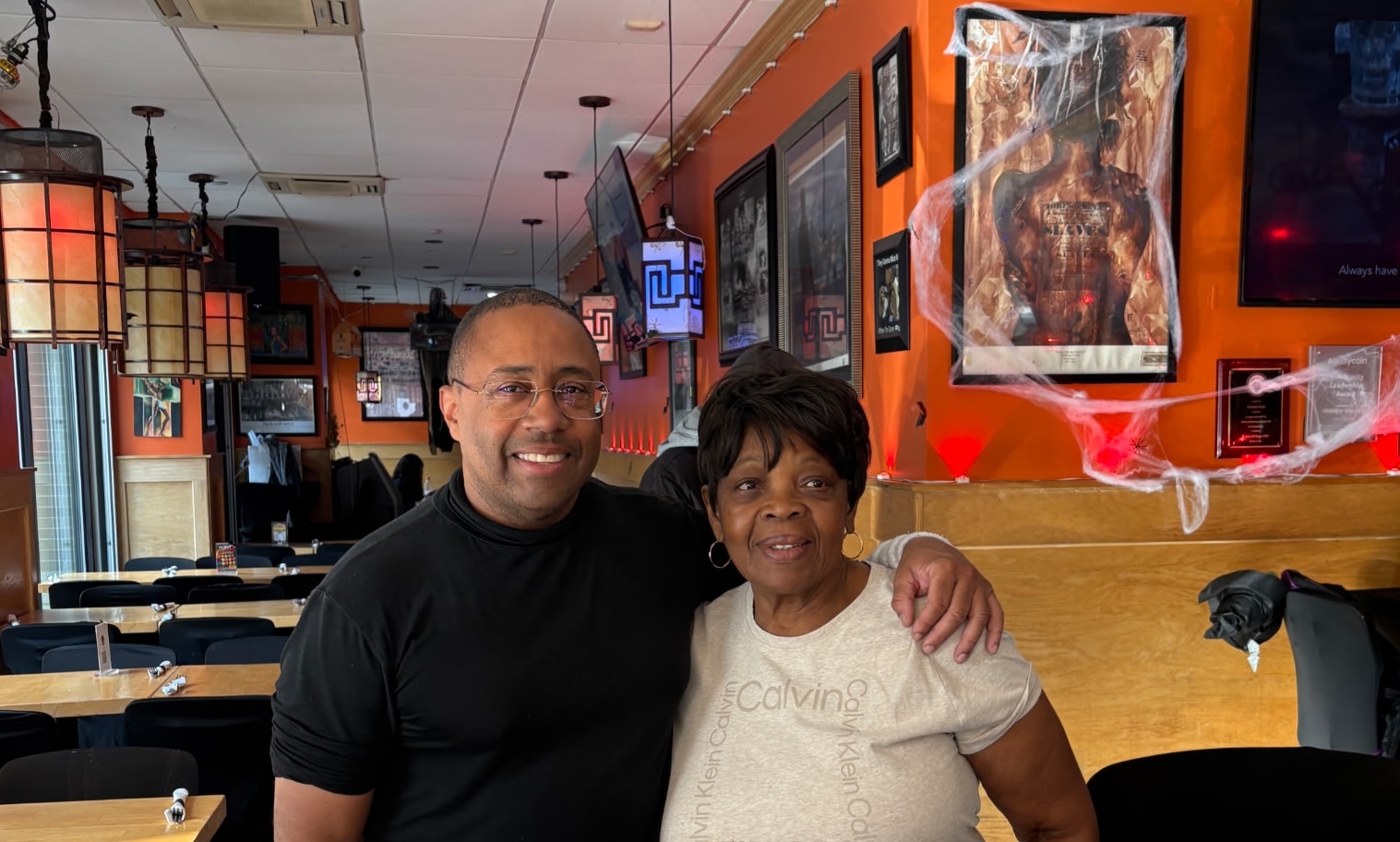
Fusion East Restaurant
Fusion East, a Black-owned restaurant in East New York, Brooklyn, is the subject of a Voices of NYC opinion column by Sam Eric Blackwell examining city school purchasing, government scrutiny, reputational harm and contracting disparities affecting Bl
In this Voices of NYC Op-Ed, Sam Eric Blackwell examines the disparity in city contracting opportunities for Black-owned businesses through the experience of East New York restaurant Fusion East. Blackwell questions how owner Andrew Walcott’s request for help collecting unpaid school invoices became a controversy surrounding his business, and calls for transparency about the treatment of Black-owned vendors and the consequences of government scrutiny.
Black-Owned Business Experience Raises Questions of Bias Within NYC Comptroller's Office
A Black-owned restaurant in East New York earned $750,000 feeding our school children. Its owner sought help collecting unpaid invoices. Instead, the restaurant became the subject of damaging publicity. Fourteen months later, the restaurant is still paying for it.
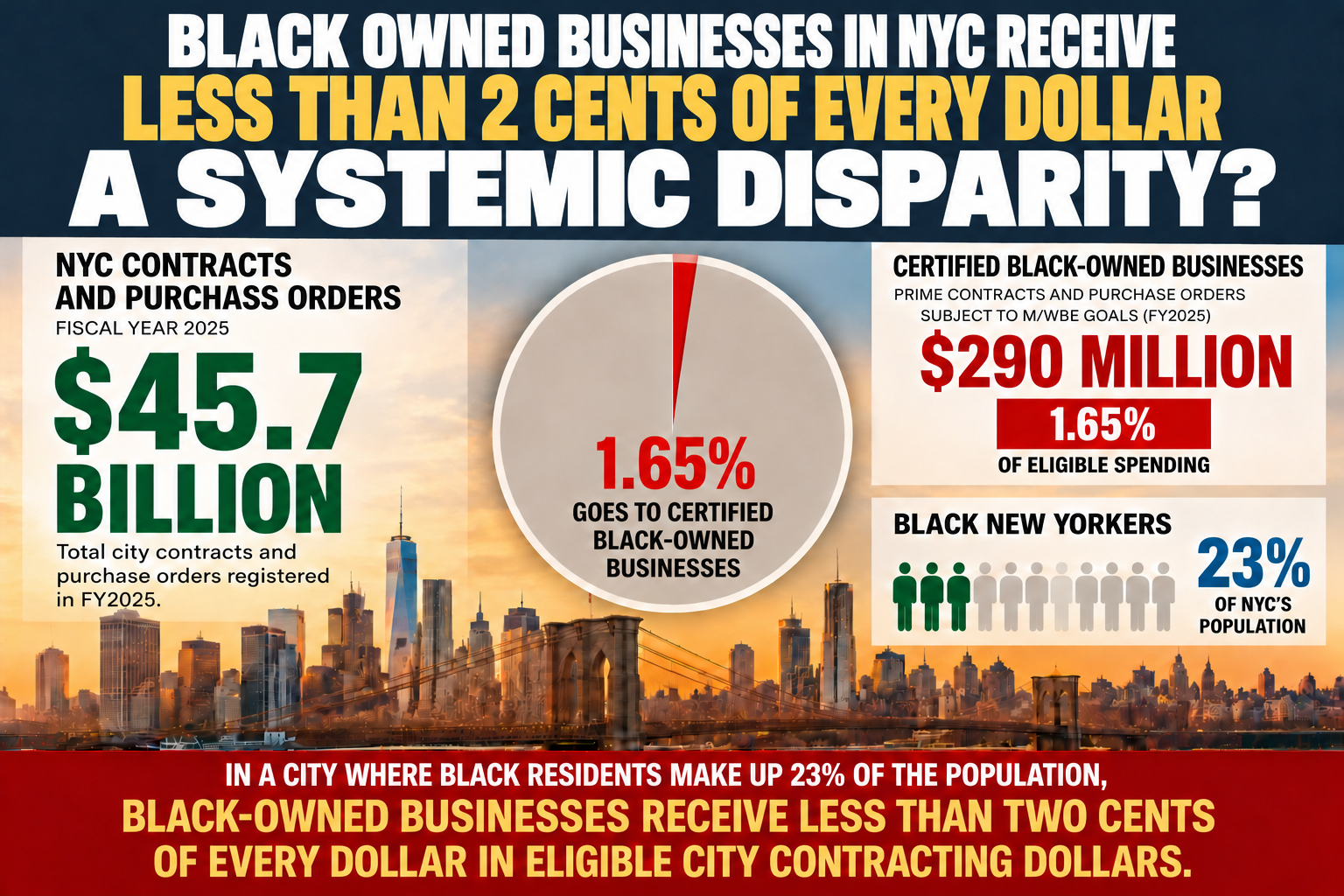
Let me say it plainly. New York City registered $45.7 billion in contracts and purchase orders in fiscal year 2025, yet certified Black-owned businesses received just 1.65% of spending subject to the city's M/WBE participation goals. In a city where Black residents make up roughly 23% of the population, that disparity should be a scandal. Instead, when a Black-owned restaurant in East New York earned approximately $750,000 feeding public schoolchildren, its success became the subject of public suspicion.
What makes this particularly troubling is how it started. Fusion East owner Andrew Walcott turned to the New York City Comptroller's Office seeking assistance collecting nearly $20,000 in unpaid invoices from public schools. Rather than receiving the assistance he sought, Walcott found his business at the center of questions about the approximately $750,000 it had earned serving schools throughout the city.
In August 2025, statements from then-Comptroller Brad Lander's office landed in an amNY article questioning Fusion East's Department of Education business. The story left New Yorkers with a clear impression: improper contracting, political favoritism, something shady. What it did not have was a finding. No one established that Fusion East did anything wrong. Not then. Not now.
Here are the facts. Fusion East has never held a DOE-wide catering contract. According to Walcott, the restaurant is among the vendors available to individual schools throughout New York City when they need catering for school events, meetings, staff functions and other activities. Schools independently select vendors based on their needs, and Fusion East built its business by providing quality food, reliable service and affordable prices.
The approximately $750,000 represented business generated through purchases by individual schools, not a special citywide contract awarded to Fusion East. That is not favoritism. That is business.
Council Member Chris Banks and Assemblywoman Nikki Lucas, whose districts include East New York, publicly challenged the Comptroller's characterization of Fusion East. In a media release and press conference, they defended the restaurant and raised concerns about the reputational harm caused by the controversy. Brooklyn Chamber of Commerce President Randy Peers also spoke in support of the business and its record of service to New York City schools.
The damage is real
For the first time in more than seven years, Fusion East's school orders have dropped sharply, Walcott says. The bad press brought a wave of hostile online reviews, many from people across the country who never set foot in East New York, let alone ate there.
The damage was compounded as the story traveled beyond amNY. The New York Post, a publication that has long faced criticism from segments of New York's Black community over its coverage, published additional articles focusing on the restaurant's school revenue and Walcott's political connections. Whatever the intentions of the reporters or officials involved, the cumulative effect was to place a successful Black-owned neighborhood business under a cloud of suspicion.
Fusion East spent years building relationships with schools across the five boroughs. Those relationships paid workers, bought supplies and kept money circulating on blocks where commercial opportunity has always been scarce. Now they are fraying.
I want to know why. Were schools told to stop ordering? Did anyone send instructions, formal or informal? Or did principals simply read the headlines and back away? The cause has not been established, but the timing demands answers.
Black-Owned Businesses Receive 1.65% of Eligible NYC Contracts
Sam Eric Blackwell
An infographic accompanying a Voices of NYC opinion column by Sam Eric Blackwell examines economic disparities in New York City government contracting. The graphic highlights $45.7 billion in total city contracts and purchase orders registered in fis
The Real Scandal Is the Economic Disparity
This is not just one restaurant's story. It sits on top of numbers this city should be ashamed of.
According to the city's Fiscal Year 2025 procurement report, Black-owned certified businesses received about $290 million in prime contracts and purchase orders subject to M/WBE goals, while the city paid tens of billions of dollars to non-Black owned businesses. That is 1.65% of eligible spending. Less than two cents on the dollar. In a city where Black New Yorkers are roughly 23% of the population. This goes directly to local economics and why black communities across New York City continue to suffer.
For decades, Black business owners have been told to compete, build relationships, deliver quality services and create jobs. That is precisely what Fusion East did. Yet in a city where Black-owned businesses receive such a small share of eligible public contracting dollars, a restaurant earning $750,000 through years of serving individual schools became the focus of damaging publicity. The question is not whether public spending deserves oversight. Of course it does. The question is why a successful Black-owned business can find itself defending its legitimacy when the city's own contracting numbers demonstrate how difficult it remains for Black businesses to secure meaningful economic opportunities.
Administration after administration has promised to fix this. Mayor after mayor, comptroller after comptroller. The numbers barely move. So, when one of the few Black businesses that actually breaks through gets publicly dragged over $750,000, I don't call that oversight. I call it a pattern worth investigating.
Scrutiny is fine. Smears are not.
Let me be clear: public money should be watched, and procurement rules should be followed. I spent more than 20 years teaching urban policy. I believe in accountability.
The Department of Education acknowledged that one school violated purchasing guidelines, and that is a legitimate matter for oversight. But a school's failure to follow procurement procedures is not, by itself, proof that the restaurant providing the food engaged in misconduct. That distinction should have been central to the public discussion.
But there is a world of difference between questioning how an agency buys things and leaving the public believing a private business is crooked when no one has found that it is. One is oversight. The other is reputational damage with a government seal on it.
I also question how this matter was communicated publicly. Information and statements from the Comptroller's Office became central to an amNe article that subsequently drew additional media attention. Public officials have a responsibility to consider how their words may affect private businesses, particularly when those businesses have not been found to have engaged in wrongdoing.
If officials knowingly made misleading statements, or quietly steered schools away from a legitimate vendor, that is not a policy disagreement. That is misconduct, and it should be investigated.
Accountability can't stop at the agency door
The city owes Fusion East, and every Black business owner watching this, three things:
- Transparency. Show us how school purchasing decisions are made and who has the authority to restrict a vendor.
- Answers. If orders fell because of government intervention, tell the public who made that call, why, and whether it was justified.
- Individual accountability. Agencies don't make decisions, people do. Where the evidence shows misconduct, name those responsible and correct it.
Brad Lander has moved on politically. The news cycle has moved on. Fusion East has not had that luxury. Its losses are still on the books.
This is bigger than Lander, bigger than one restaurant and bigger than any single administration. New York cannot keep promising economic equity while Black-owned businesses receive such a small share of eligible city contracting opportunities, only to see a successful neighborhood business face damaging public scrutiny over revenue earned providing a legitimate service.
Fusion East deserves answers. Black business owners deserve a procurement system built on fairness, not promises. Because supporting Black business is good business, and good business is our business.
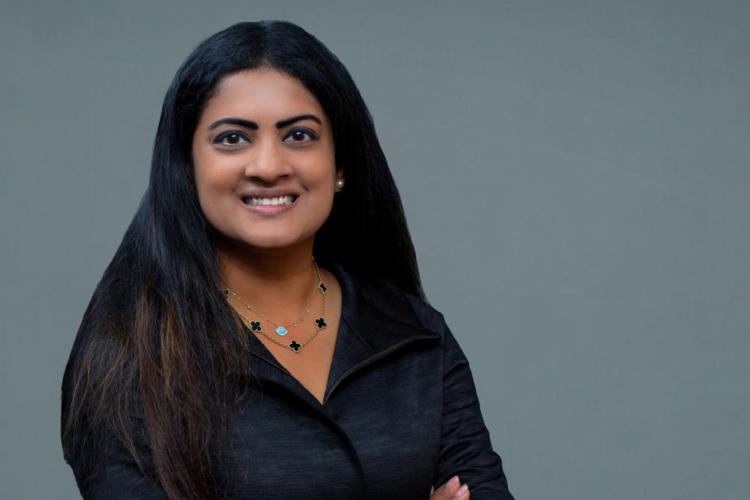
Sam Eric Blackwell is a lifelong New Yorker, a Fort Greene resident for over half a century and a retired urban studies professor at Long Island University, where he taught for more than 20 years. He is Political Director of NYC Politics and director of the Fort Greene Farragut Old-Timers Inc. Reach him at [email protected]