2484196963
Lichtwolke
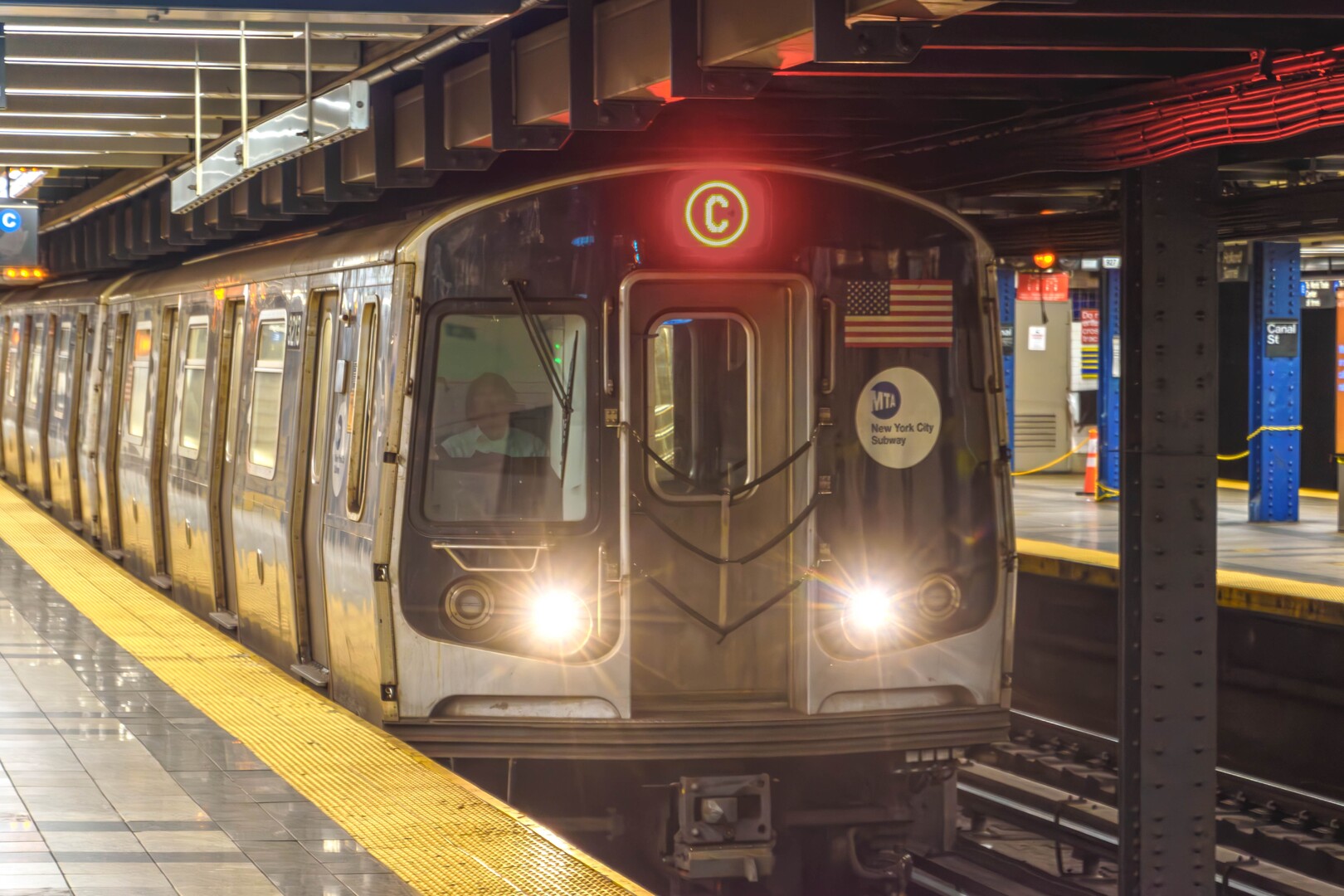
New York City, United States - May-26-2024, New York subway train pulls into a station - In 2026 The MTA has launched a $1.9 billion project to replace aging subway signals along the Fulton and Liberty lines, covering 42 track miles and 23 stations i
Subway riders traveling between Brooklyn and Queens are set to benefit from a major infrastructure investment aimed at addressing one of New York City's persistent transit problems: delays caused by aging signal equipment. The MTA has begun a $1.9 billion modernization of the A and C subway corridors, replacing technology dating to the 1930s with a computerized system that can better manage train movements. Funded through congestion pricing revenue, the project covers 42 track miles and 23 stations used by approximately 350,000 passengers each weekday. Construction will begin with track and switch replacements in Queens, while the full modernization is scheduled for completion in 2032. The investment is intended to support more frequent and reliable subway service.
Governor Hochul Announces Start of Largest Subway Signal Replacement Project in MTA History
$1.9 Billion Investment Funded By Congestion Pricing Will Modernize A and C Service in Brooklyn and Queens
Modern Signals Will Replace 1930s-Era Equipment, Providing Faster, More Frequent and More Reliable Service
Governor Kathy Hochul today announced the start of the largest signal and track replacement project in the history of the Metropolitan Transportation Authority (MTA). The $1.9 billion investment, made possible with funds from congestion pricing, will modernize A and C service in Brooklyn and Queens, replacing antiquated, 1930s-era signals with Communications-Based Train Control (CBTC). The modern signal system allows trains to safely run faster and closer together, facilitating more frequent and reliable subway service.
“Congestion pricing keeps delivering wins for New Yorkers,” Governor Hochul said. “Upgrading nearly 100-year-old signals does more than just modernize infrastructure that is long-overdue – it is a critical part of our plan to run better and more frequent subway service, shortening waits and slashing delays. When this project is done, hundreds of thousands of A and C train riders will benefit from the world-class service on new, modern trains that New Yorkers deserve.”
The project spans 42 track miles along the Fulton and Liberty lines and will replace the oldest remaining signal equipment in the subway system. The work will span from High St A/C to Ozone Park–Lefferts Blvd A, covering 23 stations serving 350,000 riders each weekday. The project corridor provides connections to seven other subway lines, 36 bus routes and connections to the Long Island Rail Road. Across their full routes, the A and C serve 750,000 riders each weekday.
The work builds on other CBTC investments serving A and C riders along Eighth Avenue between 59 St in Manhattan and High St in Brooklyn. Modernizing signals across nearly 85 miles of the subway system is made possible with funds from congestion pricing. Governor Hochul's successful funding of the MTA’s 2025–2029 Capital Plan provides an additional $5.4 billion to modernize signals across more than 75 miles on the Broadway N/Q/R/W, Liberty Avenue A, Rockaway A/S and Nassau Street J/Z lines.
MTA Chair and CEO Janno Lieber said, “Signal issues are the number one cause of subway delays – no surprise considering the ancient relics we’ve been using to direct train traffic. Thanks to this almost $2 billion project – the largest of its kind in MTA history – we are going to be able to run more A and C trains faster, safer, and more reliably than ever before.”
MTA Construction & Development President Jamie Torres‑Springer said, “This marks the official launch of the largest signal modernization project in MTA history—a transformational investment that will improve A and C service for hundreds of thousands of riders. By using new construction methods that cut our per‑mile costs by a third, we’re proving that we can modernize the system better, faster, and cheaper than ever before.”
NYC Transit President Demetrius Crichlow said, “Communication-based train control has proven to improve service for riders with faster, smoother, and more reliable trips. I’m thrilled that A and C riders can look forward to experiencing a modern system that they can rely on for decades to come.”
Queens Borough President Donovan Richards Jr. said, “South Queens families have long deserved quick and efficient subway service — not being at the mercy of century-old technology that causes constant delays and lengthens commutes. This massive investment in Communications-Based Train Control technology — made possible by the policy victory that is congestion pricing — will cut commute times, make subway rides more reliable and give our neighbors more time with their families. Thank you to Governor Hochul and the MTA for their partnership in ensuring that significant amounts of revenue raised through congestion pricing has been invested back into public transit here in Queens.”
House Democratic Leader Hakeem Jeffries said, “The world’s greatest city deserves the world’s greatest public transportation system. Unfortunately, for decades, New Yorkers have missed appointments, been late to work and lost hours of their lives due to train delays caused by aging signal infrastructure. I am grateful to Governor Kathy Hochul and the MTA for their leadership in overhauling outdated signals to make life better for riders of the A and C lines in the Eighth Congressional District and across the city.”
State Senator Andrew Gounardes said, "The world's greatest city deserves the world's greatest transit system. But right now countless New Yorkers deal with delayed trains because our century-old infrastructure hasn't kept up. This is a transformative investment that will make it easier for Brooklynites to get to work, school, and everywhere else they need to go. It's exactly why we passed congestion pricing, and it's exactly what New Yorkers need. Thank you to Governor Hochul and the MTA for making this happen."
Assemblymember Stacey Pheffer Amato said, “More reliable A train service is crucial for the residents of Southeast Queens. We are faced with the longest commute times in the City and taking bold steps to improve our longest subway line will help ease this burden! Thank you to Governor Hochul for her bold investment in our neighborhoods, let’s get Southeast Queens moving!”
Assemblymember Phara Souffrant Forrest said, “The A and C lines are lifelines for the people of my district, connecting our communities to where they need to go. This investment in modernizing our subway signals is a critical step toward faster, more reliable service.”
Assemblymember Latrice Walker said, "The residents of my district rely heavily on the A and C lines every day, and for too long, they have been burdened by service delays that inevitably come with century-old technology. Replacing these 1930s-era signals on the A and C lines with state-of-the-art technology will drastically improve the daily commutes for hundreds of thousands of New Yorkers. I am thrilled to see this critical modernization project get underway, delivering the reliable transit system that people deserve.”
New York City Councilmember Lincoln Restler said, “The A train gets you almost everywhere, but the 750,000 daily riders too often confront chronic delays and unacceptable service disruptions. I’m grateful that the MTA is taking on this massive project to upgrade our antiquated signal system and achieve faster and more reliable service for commuters and everyone else navigating Brooklyn, Queens and Manhattan on this busy line.”
Modern Signals Deliver More Reliable Service
Signal issues are the leading cause of subway delays. Much of the system still relies on aging equipment with components that are no longer commercially manufactured, making maintenance increasingly difficult and expensive.
The existing signal system divides tracks into fixed sections and identifies whether a train occupies each section. CBTC provides a more precise picture of train locations and speeds, allowing trains to safely operate closer together and supporting more frequent service. The modern equipment is also less expensive and easier to maintain.
CBTC is currently operating across the full 7 and L lines, as well as portions of the E, F, M and R routes on the Queens Boulevard and Culver lines. Following signal modernization, on-time performance on the 7 line jumped from 68% to 91%. On the E line in Queens, train speeds increased by approximately 10% following CBTC activation.
For the Fulton-Liberty signal modernization project, the MTA will use an approach that's been shown to reduce signal modernization costs per mile by 33% compared with the average for prior CBTC projects. The MTA achieved this by shifting to a design‑build contracting model that transfers much of the project risk to contractors.
Additionally, the MTA's new strategy for these projects focuses solely on installing state‑of‑the‑art Communications‑Based Train Control technology, foregoing the costly maintenance of legacy signaling during the transition, reducing the need for expensive equipment along the tracks, and maximizing scheduled service outages.
The first phase of work will focus on replacing aging switches and more than 250 feet of specialized track, between 104 St and 99 St in Queens.
The project will also include infrastructure to support future cell service for riders and work to keep existing infrastructure in a state of good repair. The contract for the project was awarded to L.K. Comstock & Railworks in December 2025. Completion is expected in the second quarter of 2032.
Source: New York State Governor's Office