NYC Begins $184 Million Reconstruction of Historic Chinatown Cultural
NYC Dept of Design & Consruction
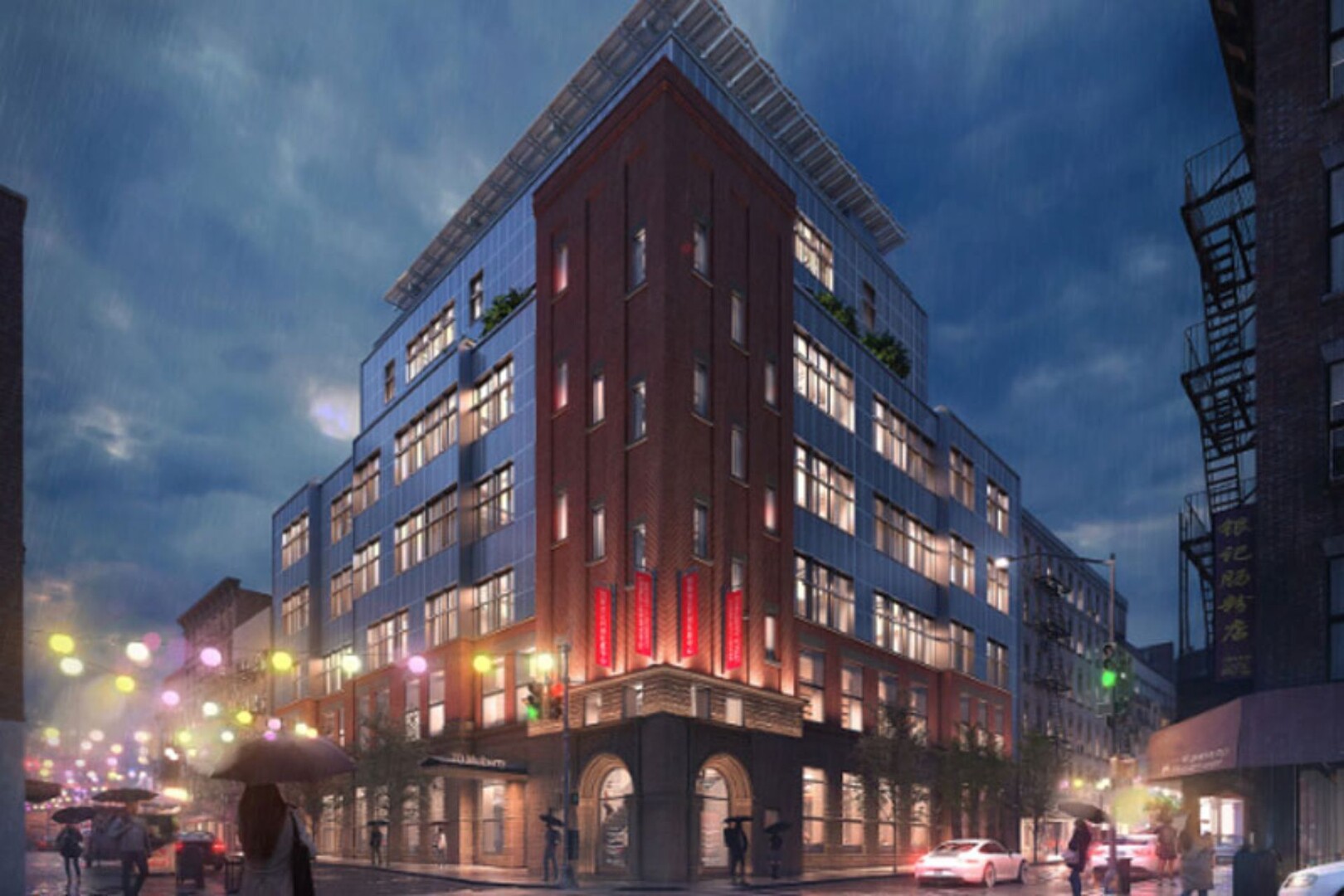
Architectural rendering illustrating New York City's $184 million reconstruction of the historic 70 Mulberry Street building in Chinatown. The eight-story project will restore permanent space for five community organizations displaced by a 2020 fire,
New York City has broken ground on a $184 million reconstruction of 70 Mulberry Street, restoring a historic Chinatown building severely damaged by fire in 2020. The eight-story cultural and community center will provide permanent space for five organizations displaced by the blaze, including the Museum of Chinese in America and Chinatown Senior Citizen Center. Plans include 30 percent more public space, accessible facilities, renewable energy systems and a public art installation by Jennifer Wen Ma. The project will preserve portions of the original 1892 structure while creating modern spaces for community services, performances and events. Completion is expected in 2030.
Mayor Mamdani Breaks Ground on $184 Million Rebirth of Chinatown’s Historic 70 Mulberry Street
Mayor Zohran Kwame Mamdani, Department of Design and Construction (DDC) Commissioner Paul A. Ochoa, Department of Citywide Administrative Services (DCAS) Commissioner Yume Kitasei and Cultural Affairs Commissioner Diya Vij today broke ground on a $184 million project to reconstruct the historic 70 Mulberry Street, restoring a cherished Chinatown institution as a permanent home for cultural organizations and a community hub for generations of New Yorkers.
Six years after a devastating fire damaged the building, the City is rebuilding the site as an eight-story cultural hub that will expand public space by 30%, preserve elements of the original architecture and provide modern facilities for the organizations displaced by the fire. The project will also include Wings of Everchange 易之翼, a three-part public art installation by visual artist Jennifer Wen Ma, commissioned through the New York City Department of Cultural Affairs’ (DCLA) Percent for Art Program.
“70 Mulberry Street captures the history and hopes of the Chinatown community,” said Mayor Mamdani. “For generations, this building has been a place where neighbors gathered, where seniors found community and where cultural organizations kept this neighborhood’s traditions alive. After the terrible fire in 2020, those organizations and the people who depend on them were forced to carry on elsewhere. Now, we’re bringing them home.”
“Today is a momentous day for Chinatown as we begin the reconstruction of 70 Mulberry Street, a place that for generations embodied the memories, culture and spirit of this community,” said DDC Commissioner Paul A. Ochoa. “The devastating fire years ago was a profound loss, but the community’s resilience never wavered. Today marks the beginning of a new chapter as the City transforms that loss into renewal, building a larger, more beautiful permanent home for the vital cultural organizations that were displaced. This project will restore a cherished cultural hub at the heart of this historic neighborhood, preserving and celebrating Chinatown’s rich heritage while creating a vibrant space for future generations to learn, gather and thrive.”
“70 Mulberry Street has been part of the heart of Chinatown for over 100 years. After losing the building to a devastating fire, we’re building it back for the community,” said DCAS Commissioner Yume Kitasei. “Working with DDC, we will preserve the historic character of this landmark building while creating a modern, accessible and sustainable facility that will serve this community for generations to come.”
“This project will restore a home to local arts organizations along with so many other community services, while paying tribute to the site’s history with a remarkable public art installation,” said Cultural Affairs Commissioner Diya Vij. “Wings of Everchange by artist Jennifer Wen Ma, commissioned by our Percent for Art program, transforms a moment of destruction into one of community rebirth. Using salvaged objects from the fire that devastated the building, Ma shows us that new possibilities can be built from what feel like moments of loss.”
The original five-story building at 70 Mulberry Street was designed by C.B.J Snyder and constructed in 1892. It first served as Public School 23 before becoming a vital community gathering space. After the school closed down in the mid-1970s, the building became home to five community-based organizations: CPC Chinatown Senior Citizen Center, United East Athletic Association, Chen Dance Center, Museum of Chinese in America and Chinatown Manpower Project.
Together, these organizations have provided invaluable cultural, recreational and social services to Chinatown residents and New Yorkers across the city. On January 23, 2020, a fire significantly damaged the building, forcing the organizations to relocate temporarily. While many have continued offering programs and services at interim locations, they have operated at reduced capacity.
The reconstructed building will give all five organizations a permanent home while providing approximately 30% more public space than the original facility. The City preserved two stories of the original façade and the historic stairwell, retaining key architectural elements of the 1892 building.
The new facility will include six community rooms, including two rooms on the top floor that can be combined into a larger space. A new kitchen will serve the senior center, while a multipurpose room on the sixth floor overlooking Columbus Park will accommodate performances, sports, cultural events, receptions, banquets and lectures. The room will connect directly to landscaped outdoor terraces along Mulberry and Bayard Streets, allowing events to extend outside. Together, the spaces will accommodate up to 475 people.
A more accessible, sustainable community hub
The reconstructed building will feature three elevators, a new lobby and accessible restrooms, making the facility fully compliant with the Americans for Disabilities Act. All major building systems — including heating, ventilation, air conditioning, mechanical, electrical, plumbing, fire alarm and security systems — will be newly installed. The all-electric building will reduce local air pollution, while emergency generators will provide backup power and strengthen the facility’s resilience.
The project will also incorporate renewable energy technology, including a rooftop solar canopy and building-integrated photovoltaics in the façade. Together, the systems are expected to generate up to 410 megawatt-hours (MWh) of electricity annually, meeting up to 30% of the building’s annual electricity demand.
The building will use less than half the energy of a modern, energy-efficient commercial building and is expected to achieve LEED Platinum certification. The project will also prioritize low-embodied-carbon construction by setting targets for the use of reused and locally sourced materials, reducing its environmental footprint.
Before construction began, DDC conducted extensive research into the building’s structural integrity and façade, including the use of 3D laser scanning.
DDC is working with world-renowned design firm Grimshaw and construction manager Hunter Roberts Construction Group for this project. The project marks the first time DDC has used the Construction Manager-Build (CM-Build) delivery method outside of library projects and emergency situations.
The approach brings designers and builders together early in the process, allowing for greater collaboration, innovation and efficient problem-solving. DDC previously used the method during the COVID-19 pandemic to rapidly construct testing and vaccination centers. Construction is expected to be completed in 2030.
Public art honors Chinatown’s past and future
70 Mulberry will feature the Wings of Everchange 易之翼, a three-part art installation by artist Jennifer Wen Ma that connects the building’s history with the community’s present and future through sculpture, paintings and oral history.
The centerpiece will be a suspended sculpture approximately 33 feet long, made of metal, glass and objects salvaged objects from the 2020 fire. Its amber glass orbs will serve as time capsules, each dedicated to a person or group, containing memories and stories about the building. Together, they will form an oral history archive preserving the voices and experiences of the community.
The installation will also include an ink painting on glass panels along the stairwell and an oral history component developed in collaboration with the community.
“I am thrilled that, with this groundbreaking, we are one step closer to reopening 70 Mulberry Street — a historic social service and cultural cornerstone in Chinatown,” said artist Jennifer Wen Ma. “I cannot wait to unveil Everchange, a three-part public artwork co-created with the very community that will re-inhabit this space and revitalize our neighborhood.”
“Nearly seven years after a devastating fire tore through 70 Mulberry Street, Chinatown is finally getting a brand-new community gathering center,” said Manhattan Borough President Brad Hoylman-Sigal. “I’m thrilled that DDC is breaking ground on a new community hub that will expand public space by 30%, feature a new public art installation and serve as the permanent home of the CPC Chinatown Senior Citizen Center, United East Athletic Association, Chen Dance Center, Museum of Chinese in America and Chinatown Manpower Project. I’m grateful to Deputy Mayor Julia Kerson, DDC Commissioner Paul Ochoa, and DCAS Commissioner Yume Kitasei for their leadership, as well as to my elected colleagues for their work bringing this project to life.”
“70 Mulberry Street is a historic Chinatown institution that has served generations of immigrants and provided space for cultural organizations, senior services and community programs,” said Councilmember Gale A. Brewer. “After the devastating 2020 fire, as Manhattan Borough President, I worked with the community and other elected officials to develop a plan to restore the building and advocated for the City funding needed to move the project forward. I also helped secure $20 million in State funding for Chinatown’s revitalization. This groundbreaking is long overdue, and the organizations displaced by the fire deserve to return to permanent homes where they can fully serve the community.”
“Hunter Roberts Construction Group is proud to be part of the reconstruction of 70 Mulberry and to help return this important cultural and community center to the people it serves,” said Kevin Barrett, Executive Vice President, General Manager at Hunter Roberts Construction Group. “We look forward to working collaboratively with the City and our project partners through the CM-Build process to bring this significant project to life.”
“Our design for 70 Mulberry is simply about the balance of heritage and innovation for a new community center,” said Stephen Pitman, Associate Principal at Grimshaw. “The preserved historic façades at the base and corner anchor the building in its past, while the modern facility above looks to the future with renewable energy and natural ventilation. But the most vital transformation is internal: creating highly accessible, flexible spaces tailored to the five returning organizations while welcoming the wider neighborhood.”
Source: NYC Mayor's Office