Black-Owned General Contracting Business in NYC
PeopleImages
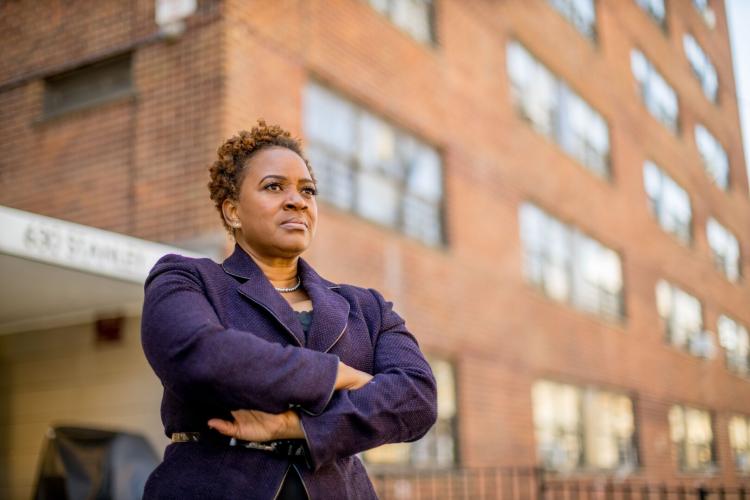
A Black-owned general contracting company illustrates the experiences of minority businesses seeking economic opportunities in New York City. The photograph accompanies a VOICES of NYC commentary by Sam Blackwell examining disparities in municipal co
In this VOICES of NYC commentary, Sam Blackwell, lifelong Brooklynite and Political Director of NYCPolitics.com, argues that New York City's contracting system has consistently failed Black-owned businesses. Drawing on Comptroller reports and City Council testimony, Blackwell examines procurement disparities across multiple mayoral administrations and questions whether existing M/WBE programs deliver meaningful economic opportunities. He calls for stronger independent oversight, greater transparency, timely payments, and changes to city contracting practices to improve opportunities for Black entrepreneurs.
NYC Keeps Promising Black Businesses Opportunity, but After 20 Years, the Contracting Dollars Tell a Much Different Story
Every year, the City Comptroller grades how New York spends with minority- and women-owned businesses. Every year, the grade for Black-owned firms is the same. The mayor's party doesn't change it. The mayor's race doesn't change it. Only the press releases change.
Start with the latest numbers. In fiscal year 2025, the city registered about $46 billion in contracts and purchase orders. Just $2.4 billion went to M/WBEs. Black-owned firms got 1.65% of the contract value subject to participation goals. Measured against everything the city bought, Black firms received about $290 million, roughly six-tenths of one percent. Put another way: for every $10 New York City spends, Black-owned businesses get six cents. Firms without M/WBE certification get about 95% of all city spending.
This isn't an exaggeration or political theater. It's a highlight of the economic dismantling of Black New York. Twenty years of report cards prove you can't systemically program Black economic success. You must fund it, by prioritizing Black business success with the assets we contribute to, like New York City's budget. We cannot survive in a city we were instrumental in building on about six-tenths of one percent of its spending when we are 23 percent of its population. A fair share would be at least $2.34 of every $10.
Black entrepreneurs did what the city asked. They got certified. At a City Council hearing last November, the administration testified that a third of the city's 11,382 certified M/WBEs are Black-owned. Yet Black firms hold under 7% of M/WBE contracts. The Council's own committee report found Black women-owned firms received just 0.39% of contract value.
This is not one administration's failure. David Dinkins set a 20 percent goal. Rudolph Giuliani dissolved the program on arrival, and New York went a decade without one. Michael Bloomberg, elected as a Republican, restarted it in 2003, but from 2009 to 2013 never once hit his targets. In 2013, Black-owned firms got 2 percent of construction dollars against a 12 percent goal. Bill de Blasio, a progressive Democrat, promised 30 percent. By 2021, the Comptroller had given the city an F with Black-owned businesses for eight straight years, at about one percent of spending. Then came Eric Adams, the city's second Black mayor. In 2023, Black-owned firms hovered at 1% of contract value. In 2025, 1.65%.
Republican, Democrat. White mayor, Black mayor. Six cents.
It isn't for lack of representation, either. Eleven of the 51 members of the City Council identify as Black. More than a fifth of the Council, and still six cents.
The Comptroller's data shows why the numbers don't move. The average contract to a non-certified firm was over $3.6 million; the average M/WBE contract, under $754,000. Human services contracts, nearly 40% of city contract value, are exempt from the program. Two-thirds of M/WBE contracts are registered after work starts, so small firms front the city's costs. And nobody is checking. Since 2022, the city has registered nearly $33 billion in goal-covered contracts with zero subcontract records. On the $3 billion Brooklyn jail contract, Black women-owned firms account for 0.01% of subcontract value.
City Hall will say it's doing better. At the same hearing, the administration cited 36 percent M/WBE "utilization." That number measures a narrow slice. The Comptroller measures the whole pie. When the city picks the denominator, the city picks the grade.
And here's what nobody can tell you: how much SBS and EDC have spent over the last decade to build Black businesses, because the city doesn't report that spending by race. We're paying for "capacity building" and never checking whether it builds anything.
Here's what the mayor should do.
Create an independent M/WBE Inspector General with power to audit prime contractors, debar violators, and claw back money when goals are faked. It should report to the Council, the Comptroller, and City Hall, and make recommendations to the mayor, while staying independent of the administration it oversees.
Convene a blue-ribbon panel to trace every dollar spent on M/WBE development since 2015, report what it produced, and cut what doesn't work. Its members should include former and current elected officials from city and state government, urban planners, business leaders, and diversity experts from around the country.
Pay firms on time. Break up mega-contracts. Extend goals to the subcontracts inside human services contracts. Tie every agency head's performance review to their Black-firm numbers.
For twenty years, New York has certified Black businesses and then not hired them. The report cards are in. The grade hasn't changed. This administration can break the pattern or become the next line in it.
About the Author
Sam Blackwell is the Political Director of NYC Politics, an Urbanist, entrepreneur, founder of Ft Greene News, and lifelong New Yorker based in Fort Greene, Brooklyn.
Data Sources
- NYC Comptroller, Annual Report on M/WBE Procurement: FY25 Findings and Recommendations (January 2026)
- NYC Comptroller, Making the Grade reports, FY2014–FY2021
- NYC Comptroller, Annual M/WBE Reports, FY2022 and FY2023
- NYC Council joint oversight hearing of the Committees on Contracts, Small Business, and Women and Gender Equity, Nov. 18, 2025 (committee report and testimony)
- City Limits, 2013 investigation of the Bloomberg-era M/WBE program
Author's calculations
- "Six-tenths of one percent" and "six cents of every $10": $290M / $45.7B ~ 0.63%.
- "About 95% of all city spending": the Comptroller reports M/WBEs receive about 5% of total citywide procurement value.
- "At least $2.34": Black New Yorkers are 23.4% of the population; 23.4% of $10 = $2.34.