New York Law Restricts Concentrated 7-OH in Kratom Products
NYC Newswire
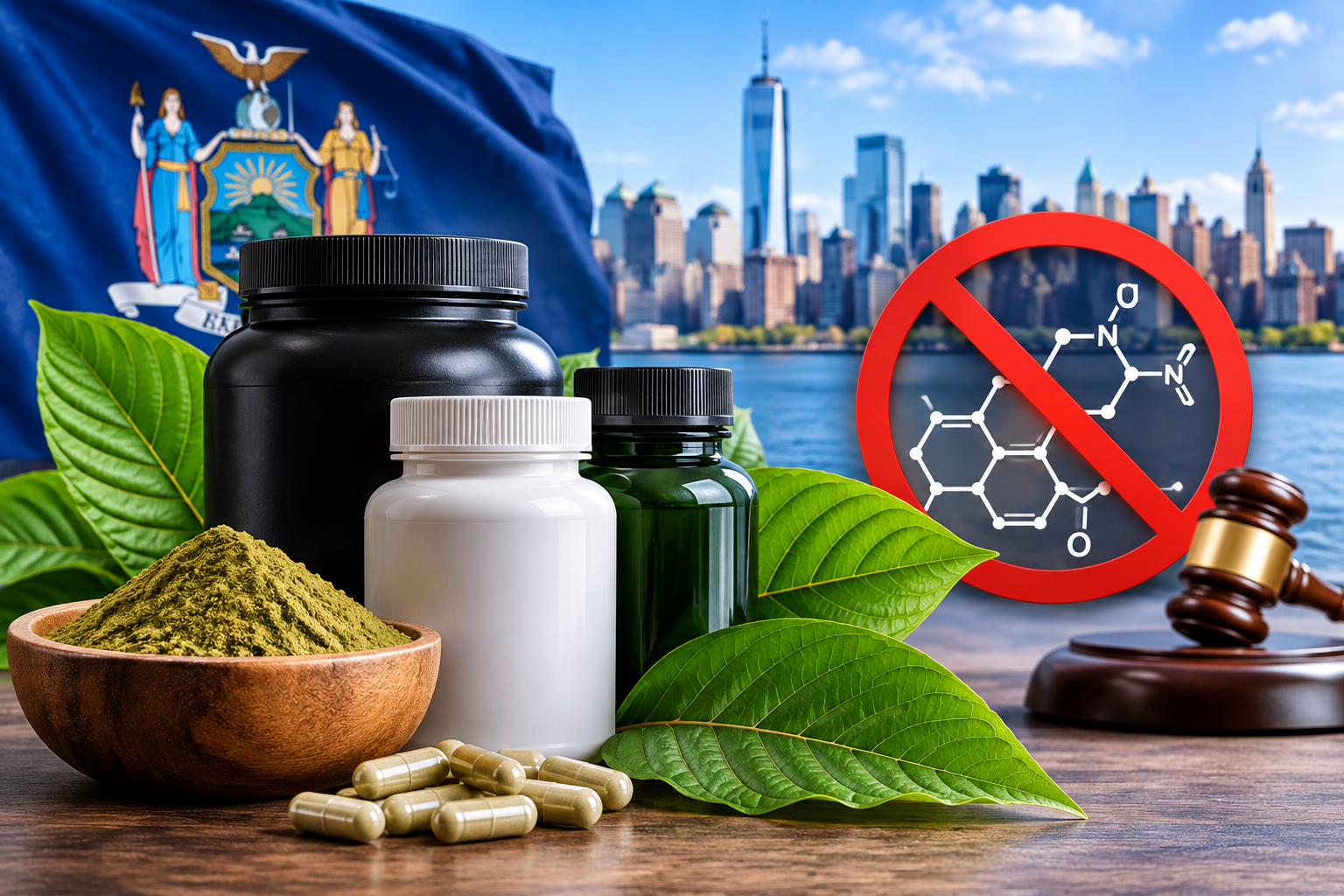
Unlabelled supplement containers alongside botanical leaves represent New York’s new restrictions on concentrated 7-hydroxymitragynine in commercially available kratom products. The legislation establishes limits on 7-OH content and penalties for bus
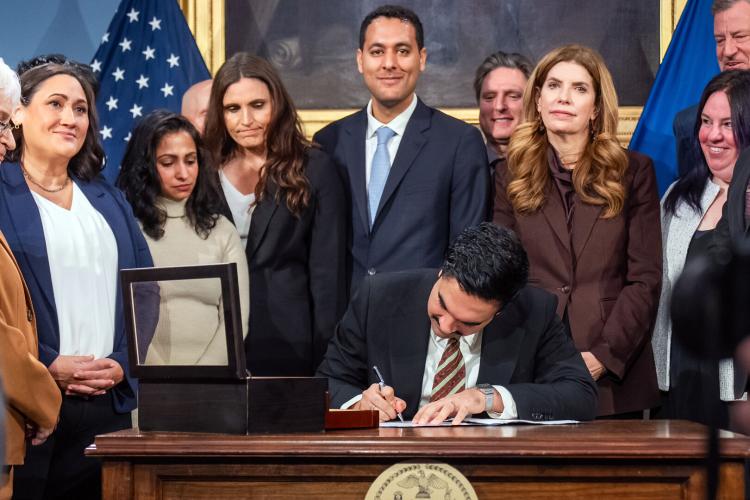
New York Governor Kathy Hochul has signed legislation restricting the sale of products containing concentrated or synthetic 7-hydroxymitragynine (7-OH), a compound found naturally in kratom. Under S.8925A/A.9156B, products exceeding 2 percent of total alkaloids or one milligram of 7-OH per serving cannot knowingly be sold, offered for sale or delivered in New York. Businesses that knowingly violate the law face civil penalties of up to $500 for a first violation and $1,000 for subsequent violations. Collected penalties will support the state’s Drug Treatment and Public Education Fund. The law adds to New York’s existing kratom regulations, including age restrictions and product-labeling requirements.
Governor Hochul Signs Legislation to Protect New Yorkers Against Harmful Effects of Concentrated and Synthetic 7-OH in Kratom Products
Legislation S8925A/A9156B Prohibits the Sale of Products Containing High Levels of 7-Hydroxymitragynine (7-OH)
Builds on the Governor Signing Two Pieces of Landmark Legislation Establishing Stronger Defenses Around the Sale of Kratom
Governor Kathy Hochul today signed legislation to further protect New Yorkers from the harmful effects of concentrated and synthetic forms of 7-hydroxymitragynine (7-OH) often found in commercially available kratom products. Naturally occurring kratom products generally contain 7-OH at low levels, however many products sold commercially at gas stations, smoke shops and other retail locations across the state contain stronger, laboratory-made 7-OH in substantially higher quantities that can have a more intense, opioid-like effect that has been linked to risk of dependence, withdrawal and other adverse health effects.
“New Yorkers deserve confidence that products sold in neighborhood stores are not exposing them to dangerously concentrated opioid-like compounds without important safeguards,” Governor Hochul said. “As Governor, I will always protect the safety of New Yorkers by ensuring manufacturers and retailers aren’t putting potentially dangerous products on store shelves and passing them off as all natural substances.”
Legislation S8925A/A9156B prohibits the sale of products that contain 7-OH at a level that exceeds 2 percent of total alkaloids or one milligram per serving and establishes fines for the sale of such products.
By setting an enforceable limit of no more than 2 percent of total alkaloids or one milligram per serving, this law protects New Yorkers from potential harmful or addictive effects associated with higher amounts of 7-OH.
Any business that knowingly violates this law risks facing civil penalties and fines of up to $500 for a first violation and $1,000 for each subsequent violation. Money recovered through civil penalties will be directed into the New York State Drug Treatment and Public Education Fund.
This follows two pieces of landmark legislation Governor Hochul signed in 2025 to establish regulations around the sale of kratom — including banning the sale of kratom to individuals under the age of 21 and requiring product ingredients and warning labels.
New York State Health Commissioner Dr. James McDonald said, “The concentrated 7-OH products being banned today have the potential to create dependency, withdrawal and other adverse health effects. Kratom is not yet regulated at the federal level, so I thank Governor Hochul for her leadership in establishing common-sense statewide regulations to ensure consumers know what they’re buying, know what ingredients are included, and ensure that dangerously concentrated products are kept off store shelves.”
New York State Office of Addiction Services and Supports Commissioner Dr. Chinazo Cunningham said, “These products can lead to severe health risks, including mimicking the effects of both stimulants and opioids, and in some cases leading to addiction and withdrawal symptoms. This announcement today adds to the significant steps that Governor Hochul has already taken to protect New Yorkers from the harmful effects of these substances, and keep these potentially dangerous products away from the public.”
State Senator Christopher J. Ryan said, “Too many dangerous substances are being marketed and sold in ways that make them appear harmless, and 7-OH is a clear example of that. Despite its potency and serious risk of addiction, these products have been readily available to consumers throughout New York State. This new law will help protect our families, prevent individuals from unknowingly exposing themselves to dangerous substances, and ensure we are taking meaningful action to address emerging public health threats. I thank Governor Hochul for signing this bill into law."
Assemblymember Phil Steck said, “Addiction medicine professionals sounded the alarm about the growing popularity of synthetic kratom products, commonly referred to as 7-OH, an abbreviation of its chemical name, or 'gas station heroin' because of where it is commonly sold. This issue first came to my attention as chair of the Committee on Alcoholism and Substance Abuse following the kratom-related death of Ballston Spa resident Nick Scribner in November 2024. 7-OH products are 13 times more potent than morphine, making them some of the most powerful opioid-like compounds. Like other opioids, 7-OH products can cause powerful addiction and fatal overdoses. Practitioners of addiction medicine treat such an addiction with the same techniques they use to treat addiction to other opioids. This legislation to ban synthetic kratom products, combined with the kratom labeling bill which we passed last year to deal with so-called 'natural kratom,' will help protect New Yorkers from these dangerous and highly addictive substances. I want to commend Governor Hochul for swiftly signing this legislation into law to keep New Yorkers safe. I also want to thank Senator-elect Blumencranz and Assemblywoman Walsh for their bipartisan support on this issue."
The State Department of Health has developed new resources providing background and safety information about kratom for New Yorkers and information about best clinical practices for clinicians.
The New York State Office of Addiction Services and Supports (OASAS) has also provided information and resources about the impacts of kratom and 7-OH.
Because kratom is not yet regulated at the federal level, nor approved by the U.S. Food and Drug Administration (FDA), the safety and efficacy of the product have not been established. However, the Drug Enforcement Administration (DEA) has announced its intent to publish a temporary order placing 7-OH above a specified threshold in schedule I of the Controlled Substances Act.
New Yorkers are encouraged to contact Poison Control with a health concern linked to the use of kratom sold in the state or call 911 in case of emergency.
New Yorkers struggling with addiction, or whose loved ones are struggling, can find help and hope by calling the state’s toll-free, 24-hour, 7-day-a-week HOPEline at 1-877-8-HOPENY (1-877-846-7369) or by texting HOPENY (Short Code 467369). Available
Source: NYC Governor
Primary Topic: Health
Publish First On: NYC Health News
Secondary Topics: NYC Business Daily, Science & Technology
Reason: The release focuses on protecting public health by restricting the sale of concentrated 7-OH products that may pose health risks to consumers.