Mount Sinai Wildfire Smoke Health Study
Mount Sinai
Mount Sinai Wildfire Smoke Health Study - 1
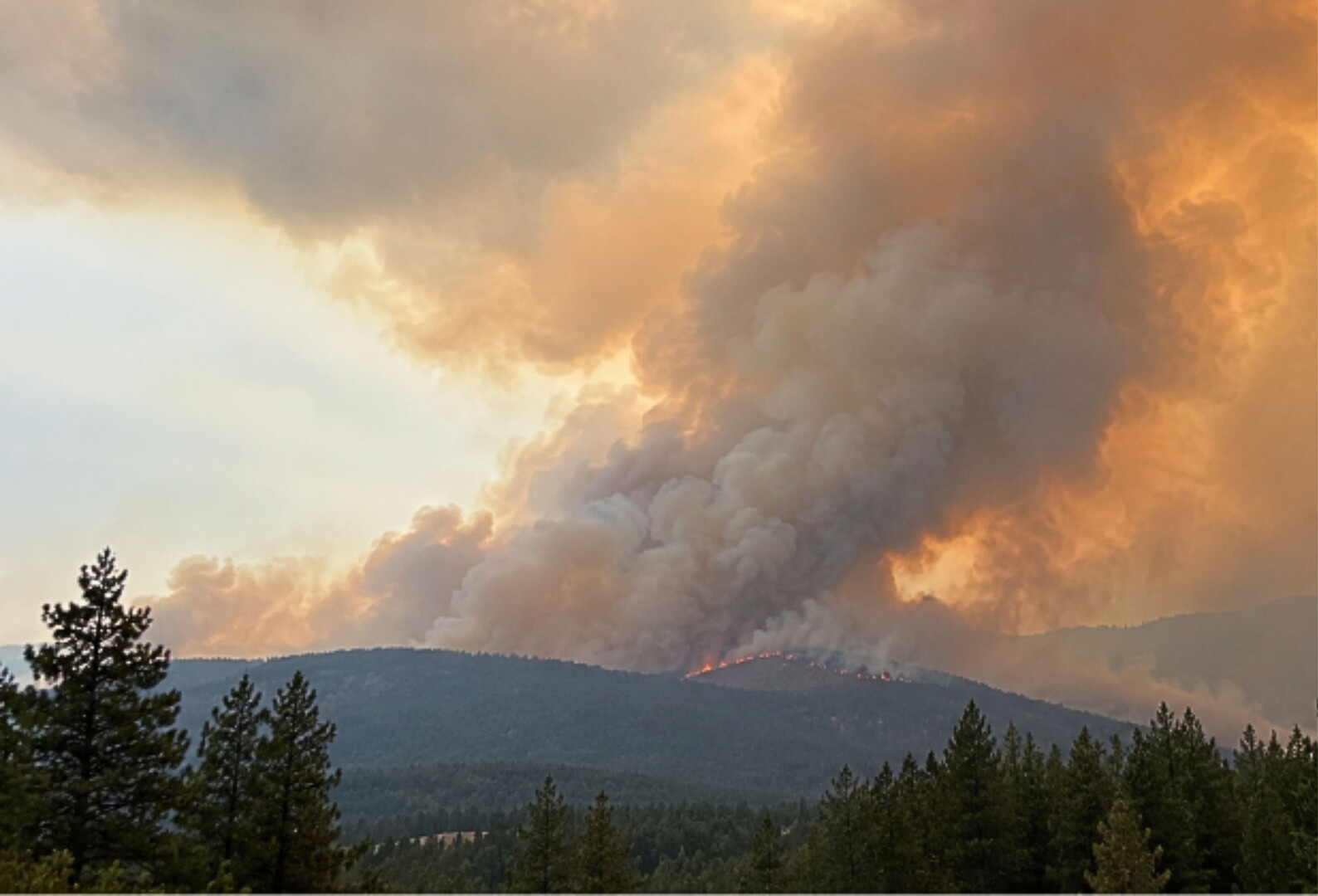
New research led by the Icahn School of Medicine at Mount Sinai suggests that long-term exposure to wildfire smoke may carry greater health risks than comparable amounts of air pollution from other sources. Two large studies examined the effects of wildfire-related fine particulate matter, known as PM2.5, on patients with lung cancer and people hospitalized for cardiovascular and respiratory conditions. Researchers found associations between wildfire pollution and poorer survival following lung cancer diagnoses, as well as increased hospitalization risks for conditions affecting the heart and lungs. The findings are particularly relevant as smoke from major fires increasingly travels across large portions of the United States, potentially exposing communities far from active wildfires and raising new questions about how health systems address air-quality risks.
Wildfire Smoke May Be More Harmful Than Other Air Pollution, Two Mount Sinai Studies Find
Wildfire-related PM2.5 linked to higher hospitalization risks for cardiovascular and respiratory disease and poorer survival among people with lung cancer
New York, NY (September 17, 2026)As climate change drives more frequent and intense wildfires, researchers at the Icahn School of Medicine at Mount Sinai have published two large-scale studies showing that wildfire smoke may pose greater health risks than other sources of air pollution, with higher risks of hospitalization for cardiovascular and respiratory disease and poorer survival among patients with lung cancer.
The studies, led by first author Min Zhang, PhD, and senior author Yaguang Wei, PhD, provide some of the strongest evidence to date that the source of air pollution matters, not just the amount.
Published in Nature Communications and The Lancet Oncology, the studies examined the long-term health effects of fine particulate matter from wildfires, known as PM2.5, a mixture of microscopic airborne particles that can penetrate deep into the lungs and enter the bloodstream. Across both investigations, the researchers found that wildfire-related PM2.5 was associated with greater health risks per unit of exposure than PM2.5 from non-wildfire sources.
The findings come as wildfire smoke increasingly affects communities far beyond traditional fire-prone regions, exposing tens of millions of people across the United States to elevated levels of air pollution.
“Wildfire smoke is no longer a regional environmental issue. It is becoming a nationwide public health challenge,” said Dr. Wei, Assistant Professor, Environmental Medicine, Icahn School of Medicine at Mount Sinai, and senior author of both studies. “Our research shows that wildfire-related PM2.5 appears to be more harmful than equivalent levels of pollution from other sources. As wildfire activity increases, public health and environmental policies must account for both the quantity and the source of air pollution.”
Wildfire Smoke Associated With Reduced Survival Among Patients With Lung Cancer
The first study, published September 15 in The Lancet Oncology, examined whether long-term exposure to wildfire-related PM2.5 affects survival among patients with lung cancer. Researchers analyzed data from 414,016 adults aged 65 years and over with lung cancer in the SEER-Medicare database. They estimated patients’ wildfire-related and non-wildfire PM2.5 exposure based on where they lived, using total ambient PM2.5 estimates developed on their own and wildfire-specific PM2.5 estimates published by researchers at Stanford University.
The study found that both wildfire-related and non-wildfire PM2.5 were associated with increased mortality risk among patients following lung cancer diagnosis. However, when researchers compared equivalent increases in exposure, wildfire-related PM2.5 was associated with substantially greater toxicity: although wildfire-related PM2.5 accounts for only about 4 percent of total PM2.5, it is responsible for about 17 percent of mortality related to total PM2.5 exposure. The findings suggest that long-term exposure to wildfire smoke may be an important and previously underrecognized risk factor for patients with lung cancer.
Among study participants, researchers estimated that hundreds of annual deaths were attributable to wildfire-related PM2.5 exposure. They also found that higher numbers of smoky days and prolonged periods of smoke exposure were associated with poorer survival outcomes.
“Patients with lung cancer are already medically vulnerable, and our findings suggest that wildfire smoke may place them at even greater risk,” said Dr. Zhang. “As wildfire-related air pollution becomes more common, reducing exposure could become an increasingly important component of cancer care and survivorship planning.”
According to Dr. Wei, the findings have immediate implications for clinicians and patients.
“For people with lung cancer or chronic heart and lung diseases, monitoring air quality and limiting exposure during smoke events may be especially important,” Dr. Wei said. “Health care providers may increasingly need to consider environmental exposures as part of comprehensive patient care.”
“Lung cancer patients are already navigating substantial health challenges, and our findings suggest that long-term exposure to wildfire smoke may add another, potentially preventable risk.” said Christine Ekenga, PhD, MPH, Rollins Assistant Professor at Emory University’s Rollins School of Public Health and co-author of the study. “We need to better understand which patients are most vulnerable and develop practical strategies to reduce their exposure.”
Wildfire Smoke Linked to Increased Risks of Heart and Lung Disease Hospitalizations
In the second study, published September 17 in Nature Communications, investigators analyzed hospitalization records from residents across 20 U.S. states between 2006 and 2019 and linked them to advanced models estimating long-term exposure to wildfire-related and non-wildfire PM2.5. The study included more than 57 million cardiovascular hospitalizations and nearly 33 million pulmonary disease hospitalizations.
Researchers found that long-term exposure to wildfire-related PM2.5 was associated with increased risks of hospitalization for a broad range of cardiovascular and respiratory conditions, including heart failure, ischemic heart disease, hypertension, asthma, pneumonia, chronic obstructive pulmonary disease, and other respiratory illnesses. At equivalent concentrations, wildfire-related PM2.5 was consistently associated with larger increases in hospitalization risk than PM2.5 from non-wildfire sources.
“This study provided a unique opportunity to directly compare the health impacts of wildfire smoke with other sources of air pollution on a large scale,” said Dr. Zhang, postdoctoral fellow in the Department of Environmental Medicine at the Icahn School of Medicine at Mount Sinai and first author of both studies. “We found that wildfire smoke can affect both the lungs and the cardiovascular system, and that its effects may be stronger than those of similar amounts of pollution from traffic, industry, and other sources.”
The researchers also found particularly strong associations among racial and ethnic minority populations, residents of metropolitan areas, and people living in communities with lower educational attainment and higher levels of socioeconomic deprivation.
The study was conducted by investigators from the Icahn School of Medicine at Mount Sinai, Harvard T.H. Chan School of Public Health, Stony Brook University, and New York University and was supported by the National Institute of Environmental Health Sciences
Implications for Public Health and Future Research
Taken together, the studies suggest that wildfire smoke should be considered a distinct environmental health threat requiring targeted mitigation strategies beyond traditional approaches focused on overall air pollution levels. Future research will focus on identifying which chemical components of wildfire smoke are responsible for its heightened toxicity and understanding the biological mechanisms through which wildfire-related PM2.5 affects cardiovascular health, respiratory disease, and cancer outcomes.
“As wildfire activity continues to grow around the world, understanding the health consequences of wildfire smoke has become increasingly urgent,” said Dr. Wei. “These studies represent an important step toward identifying who is most vulnerable and what strategies may help protect public health in a changing climate.”
Journal Information
The Lancet Oncology
Long-term exposure to wildfire-related PM2.5 and overall survival of older patients with lung cancer: a retrospective, registry-based cohort study
Published September 15, 2026.
Nature Communications
Cardiopulmonary hospitalization risks from wildfire and non-wildfire PM2.5 in 20 US states
Published September 17, 2026.
Funding
The Nature Communications study was supported by the National Institute of Environmental Health Sciences under grant numbers P30ES023515, R01ES036566, and UL1TR004419.
The Lancet Oncology study was supported by the National Institute of Environmental Health Sciences, the National Cancer Institute, the National Institutes of Health, the National Center for Advancing Translational Sciences, the Centers for Disease Control and Prevention’s National Program of Cancer Registries, Emory University, and Stony Brook University.
Source: Mount Sinai