Big Ideas Small Lots - More with Less by Palette Architecture - 1
NYCC Newswire
Big Ideas Small Lots - More with Less by Palette Architecture - 1
New York City has identified 12 community districts where eligible affordable housing proposals will qualify for an expedited public review process beginning January 1, 2027. The Affordable Housing Fast Track targets districts with the city's lowest rates of affordable housing production, including areas of Brooklyn, Manhattan, Queens and Staten Island. Under the new process, qualifying rezoning proposals that create permanently affordable housing can undergo a 90-day public review, cutting roughly four months from the traditional land-use process. The designated districts include neighborhoods such as Bay Ridge, Canarsie, the Upper East and West Sides, Corona, Bayside and Staten Island's South Shore. The city will recalculate the 12 districts every five years.
Mamdani Administration Puts 12 Neighborhoods on Fast Track for Affordable Housing
Voter-approved process will speed up affordable housing development in neighborhoods that have produced the least
12 Fast Track districts produced just 1.1% of the city’s new affordable housing over the past five years, averaging just 12 affordable homes per district per year
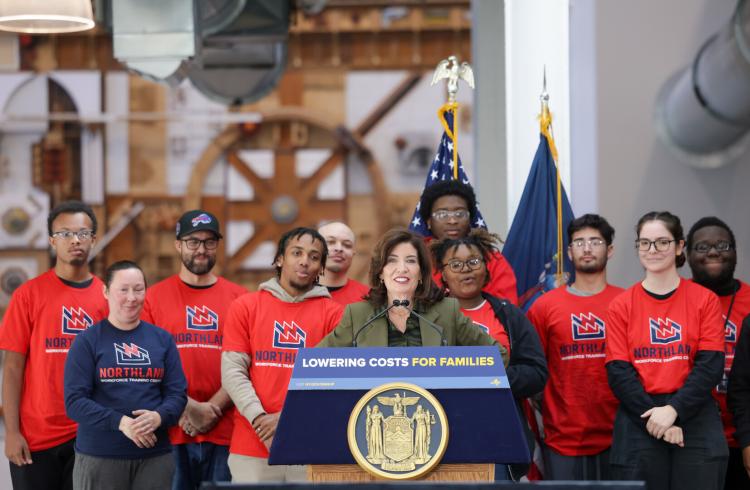
New York City Mayor Zohran Kwame Mamdani and Department of City Planning (DCP) Director Sideya Sherman announced the 12 community districts where the voter-approved Affordable Housing Fast Track will take effect in January 2027, bringing the City one step closer to a housing system where every neighborhood does its part to meet the needs of New Yorkers.
The 12 Affordable Housing Fast Track districts with the lowest rate of affordable housing production are:
- Brooklyn CD 10: Bay Ridge, Dyker Heights
- Brooklyn CD 12: Borough Park, Kensington
- Brooklyn CD 18: Canarsie, Flatlands
- Manhattan CD 7: Upper West Side
- Manhattan CD 8: Upper East Side, Roosevelt Island
- Queens CD 4: Corona, Elmhurst
- Queens CD 5: Ridgewood, Maspeth, Middle Village
- Queens CD 10: South Ozone Park, Howard Beach
- Queens CD 11: Auburndale, Bayside, Douglaston
- Queens CD 13: Queens Village, Bellerose, Rosedale
- Staten Island CD 2: Mid-Island
- Staten Island CD 3: South Shore
For too long, affordable housing production has been concentrated in a small number of neighborhoods, while other communities have produced little or none. The 12 Fast Track districts represent roughly one-fifth of New York City’s 59 community districts but produced just 724 of 63,870 new affordable homes over the past five years — 1.1% of the citywide total.
The four lowest-producing community districts each produced fewer than 10 affordable homes over five years. The highest-producing district created eight times as many affordable homes as all 12 Fast Track districts combined. The AHFT summary dataset is available here.
“New York’s housing crisis is not going to be solved by asking the same neighborhoods to do all the building,” said Mayor Mamdani. “Every New Yorker deserves a home they can afford, and every neighborhood must be part of delivering it. The Affordable Housing Fast Track gives us a new tool to cut through red tape and make sure our housing growth is shared more fairly across all five boroughs. We are going to build – block by block, neighborhood by neighborhood — at the scale this crisis demands.”
“Last November, New Yorkers went to the polls and delivered a mandate for affordability. We’ve moved quickly to implement these new tools like the Affordable Housing Fast Track, with clear criteria for where it will apply. Soon, it will be easier to build affordable housing in the districts that have added the least — an important step in our work to deliver the housing options in every neighborhood that New Yorkers deserve,” said Leila Bozorg, Deputy Mayor for Housing and Planning.
“For too long, affordable housing production has been deeply uneven across New York City, leaving too many New Yorkers with too few choices about where they can live,” said DCP Director Sideya Sherman. “The Affordable Housing Fast Track gives us a new tool to help change this by making it easier to advance permanently affordable housing in communities that have produced the least. We look forward to using this tool to expand housing opportunities across these 12 districts and bring meaningful housing relief to New Yorkers.”
“Every neighborhood has a part to play in making our city fairer and more affordable. Supported overwhelmingly by voters last November, the Affordable Housing Fast Track is an essential new tool to cut red tape and build affordable housing in the places that need it most. Neighborhood by neighborhood, this will help us achieve our collective goal of building a more affordable city,” said Housing Preservation and Development (HPD) Commissioner Dina Levy.
In November 2025, New York City voters approved changes to the City Charter to address the uneven distribution of affordable housing. Beginning January 1, 2027, eligible rezoning proposals that create affordable housing in the 12 designated districts will use a streamlined 90-day public review process, cutting roughly four months from the traditional Uniform Land Use Review Procedure (ULURP). The Fast Track preserves Community Board and Borough President review and opportunities for public input. It does not change environmental review requirements or landmark protections.
The Mamdani administration moved quickly to put the Fast Track into action, adopting a clear and consistent methodology in April to measure affordable housing production relative to each community district’s existing housing stock. The 12 districts will be recalculated every five years based on updated affordable housing production, with the next list issued in October 2031.
DCP will host a virtual public information session on December 3 to explain how the Affordable Housing Fast Track works and answer questions from New Yorkers. Additional information, including an interactive map, is also available on DCP’s website.
The Affordable Housing Fast Track is a key part of Block by Block, the Mamdani administration’s housing plan. The plan calls for creating 200,000 new affordable homes and preserving another 200,000 over the next decade, backed by a $22 billion investment in affordable housing capital over five years.
In the coming months, the administration will explore City-sponsored land use actions in these districts to deliver urgently needed affordable housing. The administration has also moved quickly to implement other voter-approved land use tools, including the City’s first Expedited Land Use Review Procedure (ELURP) at 351 Powers Ave. in the Bronx. Approved by the City Council in May, the project will create approximately 84 affordable homes.
The administration is also advancing an ambitious land use agenda that includes a citywide transit-oriented development proposal, neighborhood plans including two already underway in the Bronx and Brooklyn and new housing on City-owned land. At 100 Gold Street, for example, the administration is advancing a plan for nearly 4,000 new homes, including approximately 1,000 permanently income-restricted affordable and rent-stabilized.
Block by Block meets the city’s housing crisis with the scale and urgency New Yorkers deserve. Alongside building and preserving affordable homes, the plan includes standing up to negligent landlords, strengthening tenant power, investing in public housing and cutting the red tape that prevents affordable homes from becoming reality.
As Mayor Mamdani has said, New York cannot afford half-measures or delays when working people are being pushed out of the city they built.
“NYHC is excited to see changes approved by voters last year start to take effect. The Affordable Housing Fast Track is an important step toward creating more affordable housing in neighborhoods that have historically added too little. Our NYC Housing Tracker has shown the same pattern over the past five years: affordable housing is not being distributed equitably across the city. As New York confronts its housing crisis, every neighborhood must do its part to expand the city’s affordable housing supply,” said Rachel Fee, Executive Director of New York Housing Conference.
"Less than a year after voters approved the Affordable Housing Fast Track, the city is taking a major step towards making it real. By streamlining land-use review in the districts that have built the least, the city can get shovels in the ground faster to build the housing New Yorkers need. Today's unveiling of these 12 districts means more affordable homes, delivered sooner, in the neighborhoods that need them most. The Building Congress is proud to stand with the City as we build a more affordable New York together," said Carlo Scissura, President and CEO of NY Building Congress.
“Last November, New Yorkers voted overwhelmingly for a city that builds, because they know more homes mean lower rents, stronger neighborhoods, and a chance for the next generation to stay here. Open New York fought alongside a broad coalition to pass these measures to make our city fairer and more affordable, and we are excited to see them put to work. Many of the Community Districts on this list have built almost no housing in years, and new homes there would bring real relief to families being priced out. These reforms are already changing our housing landscape, and we are already seeing some of the Council Members representing these low-growth neighborhoods bringing solutions to the table. Everyone has a part to play, especially the people who know their neighborhoods best, and we look forward to working with anyone ready to be a proactive leader in building more homes for their neighbors and a more affordable city together,” said Annemarie Gray, Executive Director of Open New York.
“New York City’s housing shortage is too large for any one neighborhood to solve, and meeting it will require every part of the city to be part of the solution,” said Tom Wright, President & CEO of the Regional Plan Association. “That is why voters approved the implementation of the Affordable Housing Fast Track. It is an important tool to help move critical affordable housing projects forward, while maintaining a meaningful role for communities in the review process. With the City estimating a need for roughly 700,000 additional homes over the next decade, progress requires better processes and more collaboration to ensure we deliver on what New Yorkers have voted for.”
“ANHD supported creation of the Affordable Housing Fast Track because we’ve long recognized the need for a fairer distribution of affordable housing development across all New York City neighborhoods,” said Barika X. Williams, Executive Director of the Association for Neighborhood and Housing Development (ANHD). “Today's release of the 12 Fast Track Community Districts brings us closer to a more equitable city where every community contributes to expanding the affordable housing we so desperately need.”
“There are pronounced geographical disparities in the construction of affordable housing, with many neighborhoods producing none or next to none,” said Howard Slatkin, Executive Director of Citizens Housing and Planning Council. “The launch of a fast track process for approving land use actions that create affordable housing will speed the process of remedying these disparities, and ensuring that no neighborhood is off-limits to people seeking affordable homes.”
"Over half of New York City renters are rent-burdened. To build the housing New Yorkers need, we need all hands on deck—and all districts contributing their fair share. The Affordable Housing Fast Track speeds up the process to approve new housing, with a focus on neighborhoods that have built the least affordable housing. It is both an efficient and equitable solution to a shortage decades in the making,” said Catherine Vaughan, Co-Executive Director, Abundance New York.
Source: NYC Mayor's Office