Mount Sinai Launches Center for Genomic AI and Microbiome Medicine
Mount Sinai
Mount Sinai Launches Center for Genomic AI and Microbiome Medicine
Mount Sinai’s Icahn School of Medicine has established a new research center that will explore how genetics and the microorganisms living in the human gut may work together to influence disease development and patient outcomes. Using advanced sequencing technologies and artificial intelligence, researchers plan to analyze complex biological data in search of patterns that could help explain why diseases progress differently among patients and why individuals can respond differently to the same treatments. Initial research will concentrate on Alzheimer’s disease, Parkinson’s disease and gastrointestinal cancers, with the broader goal of supporting more personalized approaches to disease risk, diagnosis and treatment.
Mount Sinai Launches Center for Genomic AI and Microbiome Medicine to Advance Precision Medicine
New center aims to better understand diseases and change their trajectories by studying gut bacteria and human genomes together
The Icahn School of Medicine at Mount Sinai has launched the Center for Genomic AI and Microbiome Medicine, a research center that will bring together human genetics and microbiome research and use artificial intelligence (AI) to investigate how human genetic variation and the gut microbiome jointly shape disease progression and treatment response.
“This new Center puts us at a turning point as advances in genomics and AI enable us to bring human genetic and microbiome data together to better understand a wide range of diseases,” said Alison M. Goate, DPhil, Jean C. and James W. Crystal Professor and Chair of Genetics and Genomic Sciences at the Icahn School of Medicine at Mount Sinai.
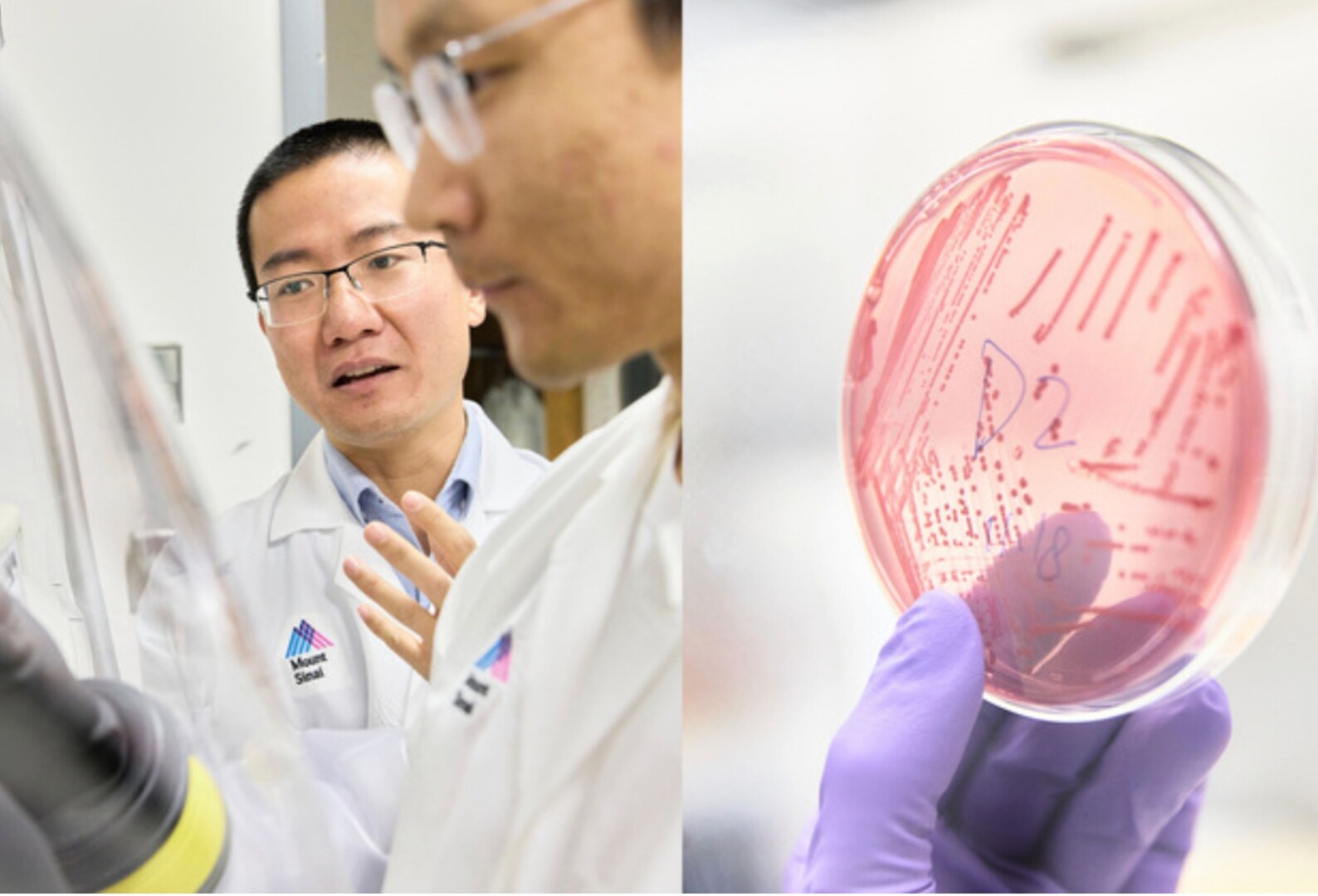
Established within the Department of Genetics and Genomic Sciences, the Center is directed by Gang Fang, PhD, Professor of Genetics and Genomic Sciences at the Icahn School of Medicine at Mount Sinai.
“The big question is, how can we change the trajectory of human disease?” said Dr. Fang. “Why do some patients respond more favorably to a treatment, while others do not? And why do some patients progress faster, while others progress more slowly?”
A person’s genome can reveal inherited risk and other biological differences. The gut microbiome changes in response to diet, medications, environment, and immune activity, and can influence metabolism, inflammation, and biology across the body. The Center will study human genetic and microbial variation together to identify relationships that may help explain differences in disease and treatment response.
The Center’s expertise in long-read sequencing will allow researchers to examine longer stretches of DNA, retain more molecular context, distinguish closely related microbial strains, and study genetic and epigenetic variation in greater detail. Researchers will use genomic AI models to integrate complex human genomic and microbiome data and investigate the biological mechanisms associated with disease trajectory and treatment response.
The Center will initially focus on neurodegenerative diseases, including Alzheimer’s disease and Parkinson’s disease, as well as gastrointestinal cancer. The Center will foster new collaborations across Mount Sinai and draw on expertise in genomics, systems biology, microbiome science, computational modeling, data science, and clinical research.
Two recent studies led by Dr. Fang demonstrate how these methods can track microbiome variation in the context of human disease and treatment. A 2025 Nature Microbiology study used long-read metagenomics to track donor bacterial strains after fecal microbiota transplantation and examine how they persisted and adapted over time. A 2026 Cell Host & Microbe study identified reversible epigenetic states that can help gut bacteria survive disruptions such as antibiotics, offering insight into microbiome resilience and its variability across individuals.
Researchers will examine whether integrated genetic and microbiome profiles can support earlier risk assessment, clarify variation in drug response and toxicity, and identify mechanisms that could inform future diagnostic or therapeutic strategies. Prospective studies across diverse populations will be needed to validate the models and determine how they may translate into clinical use.
Source: Mount Sinai