NY Attorney General Letitia James
lev radin
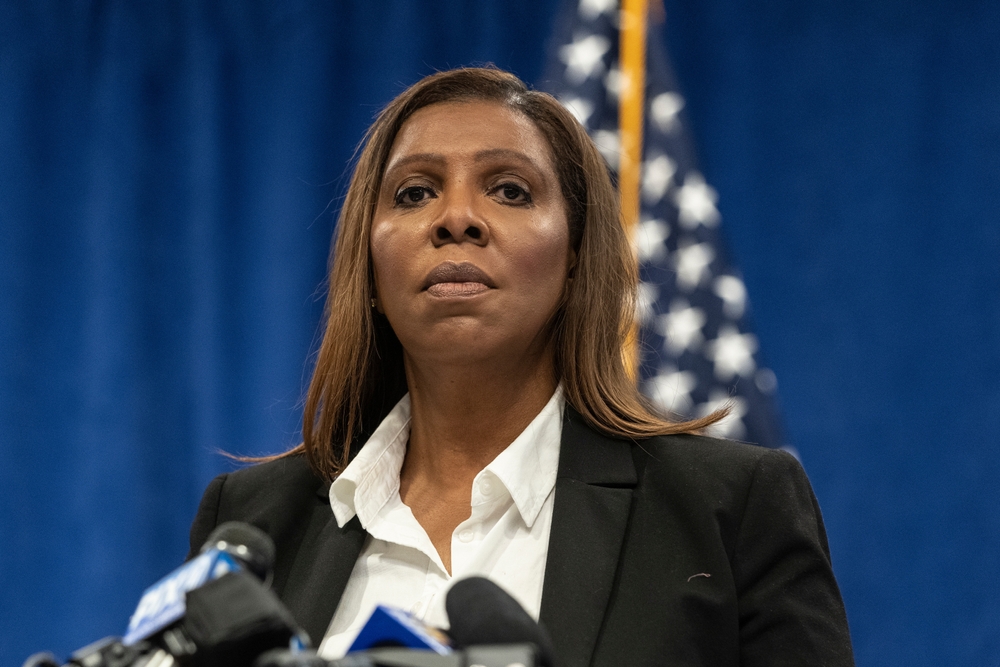
New York, NY - May 26, 2022: Attorney General Letitia James speaks during joint announcement with mayor Eric Adams at AG New York office
New York Attorney General Letitia James announced two settlements with Carelon Behavioral Health following investigations into inaccurate mental health provider directories and improper denials of addiction treatment coverage. Carelon will pay $2.35 million in penalties, fees and costs, while providing up to $8 million in restitution to eligible members who paid for out-of-network mental health services. Additional reimbursements will address certain denied substance use treatments. Investigators found widespread provider directory inaccuracies, including unavailable psychiatrists, and identified instances of coverage decisions using unapproved standards. The settlements also require improved appointment access, updated provider listings and independent oversight of Carelon's compliance.
Attorney General James Expands Access to Mental Health and Substance Use Disorder Treatment for Millions of New Yorkers
OAG Investigations Found Widespread “Ghost Networks” That Prevented New Yorkers from Accessing Treatment and Denied Addiction Treatment Using Improper Criteria
Carelon Will Pay At Least $10.35 Million in Penalties and Restitution, Repay Eligible Members, and Overhaul How It Serves New Yorkers
New York Attorney General Letitia James today announced two settlements with Carelon Behavioral Health, Inc. (Carelon) after two Office of the Attorney General (OAG) investigations found that Carelon misled New Yorkers searching for mental health care by directing them to providers who were unavailable and improperly denied coverage for substance use disorder treatment. Carelon administers all behavioral health benefits for several popular health plans, including EmblemHealth, Anthem Blue Cross Blue Shield, Independent Health, and the Empire Plan, the health plan for state and local government employees. Under the settlements, Carelon will pay $2.35 million in penalties, fees, and costs, provide up to $8 million in restitution to eligible members who paid out of pocket for out-of-network mental health care, repay other eligible members for out-of-pocket payments for bills denied by Carelon, and overhaul its provider directories and substance use disorder coverage reviews.
“When someone is ready to seek help for a mental health condition or addiction, every day matters,” said Attorney General James. “Carelon left New Yorkers calling provider after provider who could not see them and made it harder for people to get the treatment to which they were entitled. These settlements will help people get the care they need and put money back in New Yorkers’ pockets. My office will keep fighting until every New Yorker can get the mental health and substance use treatment they deserve.”
Carelon is responsible for the mental health and substance use disorder coverage of more than four million New Yorkers across a variety of health plans. Through two investigations, OAG found that Carelon violated a 2015 agreement with OAG that required it to, among other things, maintain an accurate provider directory, ensure an adequate provider network, and only use approved criteria when reviewing requests for substance use disorder treatment.
Mental Health Ghost Network Investigation
The OAG’s first investigation found, through a secret shopper study, that Carelon's online provider directories contained many errors, including listings for providers who were unreachable, no longer practicing, not accepting new patients, or not actually in-network. As detailed in Attorney General James’ report, Inaccurate and Inadequate: Health Plans’ Mental Health Provider Directories, OAG determined that 82 percent of surveyed Emblem behavioral health providers that Carelon listed as accepting new patients were effectively unavailable, creating a “ghost networks” of providers. The OAG found that the company internally acknowledged that it had a ghost network, but did not share that information with Emblem, and that Carelon regularly dismissed members’ complaints about their inability to find care.
The consequences for New Yorkers were significant. In one case, a member searching for a psychiatrist for their spouse called at least eight providers listed in Carelon’s directory, but none could help. Carelon gave the couple approximately 25 additional names, all without success, and then contacted 38 more providers itself and still could not secure an appointment. Despite these efforts, Carelon rejected the member’s complaint as “unsubstantiated” because the member had not provided the names of the providers they called within 10 days. In another case, a mother seeking a psychiatrist for her 14-year-old son could not find an in-network provider accepting new patients, even after contacting Carelon directly for help. It took several months and OAG’s intervention before Carelon agreed to cover an out-of-network psychiatrist.
As a result of OAG’s investigation, Carelon will pay up to $8 million in restitution to members forced to seek out-of-network mental health care because they could not get an in-network appointment. Eligible members can seek reimbursement for care received as early as January 1, 2020. Carelon must also repay eligible members who paid extra, with 12 percent interest, because Carelon incorrectly listed a provider as in-network. An independent monitor will review claims and determine who qualifies for reimbursement.
Moving forward, Carelon must overhaul its provider directories by correcting inaccurate listings within two business days, verifying provider information every 90 days, and confirming that providers are accepting new patients before referring members. It must also allow members and providers to report inaccuracies, remove providers who have not submitted claims in 90 days unless they confirm they are still participating, and conduct quarterly secret shopper surveys. Carelon must count unanswered calls and unreachable providers when measuring directory accuracy and publish the results.
Attorney General James is also requiring Carelon to ensure members can get urgent care appointments within 24 hours and initial outpatient appointments within 10 business days. If members say they cannot secure an appointment with an in-network provider, and Carelon cannot find an appropriate provider within three business days, members must be allowed to see an out-of-network provider and pay their usual in-network costs. The same protection applies to members who were incorrectly told a provider was in-network.
Lastly, to improve access to mental health care, Carelon must develop a plan to recruit and retain behavioral health providers, reduce administrative burdens, and invest in recruiting child and adolescent psychiatrists and psychiatric nurse practitioners. An independent monitor will audit Carelon's provider directories, appointment availability, out-of-network use, and behavioral health reimbursement rates and network size compared with medical care, and report to OAG every six months.
Substance Use Coverage Denial Investigation
The OAG’s second investigation examined how Carelon decides whether to cover addiction treatment. The OAG found that Carelon improperly denied members’ substance use disorder treatment requests using unapproved medical necessity criteria in at least 41 instances. The OAG also reviewed dozens of cases in which independent reviewers overturned Carelon’s coverage denials and found that Carelon failed to adequately consider patients’ substance use histories, co-occurring mental health conditions, and withdrawal symptoms.
Since 2017, New York law has required insurers to use medical necessity criteria approved by the New York State Office of Addiction Services and Supports (OASAS) when reviewing requests for substance use disorder treatment. Carelon failed to make determinations using OASAS’ standards and, between 2019 and 2022, independent reviewers overturned 17 of 24 appealed denials for Empire Plan members, 27 of 50 for Emblem members, and four of six for MVP members. Given that only a small share of eligible consumers appeal denials, the number of affected members is likely much higher.
As a result of the investigation, Carelon must repay eligible members who paid out of pocket or have unpaid bills for addiction treatment following an improper denial dating back to January 1, 2020. The company must proactively identify eligible members and issue refunds within 180 days of the settlement’s effective date, and pay $350,000 in penalties, fees, and costs.
Going forward, Carelon must use only OASAS-approved medical necessity criteria and review each member’s full case file, including their diagnosis, symptoms, treatment goals, substance use history, co-occurring conditions, and the risks of stopping treatment. Carelon may deny coverage only when treatment does not meet OASAS standards. The company is also prohibited from minimizing withdrawal symptoms, requiring patients to fail at a lower level of care before approving a higher one, or requiring proof that a patient poses a risk of serious harm to themselves or others.
“As Chair of the Senate Mental Health Committee, I recognize that access to resources and support can help save lives,” said Senator Samra Brouk. “I applaud Attorney General James for investigating Carelon’s use of improper criteria for denying access to care and holding them accountable for these harmful practices. We must continue working to ensure that when someone reaches out for mental health or substance use support, they receive clear information, timely access, and the critical care they need.”
“Attorney General James has proven to be the champion for engaging the substance use disorder epidemic in New York state. Her accomplishments are second to none,” said Luke J. Nasta, President and CEO, Camelot of Staten Island. “The real teeth and consequences in this settlement show Letitia James really gets it. This will save lives.”
“As a mental health and substance use treatment leader for over 57 years, we pride ourselves on being the SafetyNet of the SafetyNet, caring for some of the most marginalized members of our community,” said Jonnel Doris, CEO of StartCare. “Central to the care we provide is the trust that our work must be without fail and that we are always available to both longstanding and new clients alike. No person should have to navigate provider directories that promise access to care but fail to deliver it. Delays in service can be the difference between life and death for the people we serve. I applaud Attorney General James and her office for their continued leadership in ensuring treatment is accessible to those in need and that New Yorkers receive the care to which they are entitled.”
These matters were handled by Assistant Attorneys General Michael Reisman and Carol Hunt under the supervision of Health Care Bureau Chief Darsana Srinivasan. The Health Care Bureau is part of the Division for Social Justice, which is overseen by First Deputy Attorney General Meghan Faux.