Science & Technology
 ">
 ">
New York Moves Ahead With RAISE Act AI Regulations
- Science & Technology
- 1 month ago
New York is moving forward with implementation of the Responsible AI Safety and Education Act, establishing new transparency and reporting requirements for large developers of advanced artificial intelligence models. Beginning in November, covered developers are expected to begin registering with the state and preparing for requirements that take effect in January 2027. The law requires covered companies to publish safety frameworks, report specified critical safety incidents within 72 hours and submit information about potential catastrophic risks. Oversight will be handled through New York's new Office of Digital Innovation, Governance, Integrity and Trust, known as DIGIT. The state has also appointed Marc Gilman as deputy director for RAISE Act implementation as it builds the new regulatory operation.
- Science & Technology
- 1 month ago
 ">
NYC Carter Hospital Hits 81% Ventilator Weaning Rate
- NYC Health News
- 1 month ago
NYC Health + Hospitals/Carter in East Harlem says its specialized ventilator weaning program has increased its successful weaning rate to 81%, up from 72% in 2023. The 14-bed program has helped 150 patients transition off mechanical ventilation over the past year, with the process typically taking two to four weeks. Carter says the program has also expanded opportunities for patients who previously might not have been considered candidates for ventilator weaning. Among them is Lisa McNamee, who had relied on mechanical ventilation for nearly five years after developing severe respiratory failure. McNamee was successfully weaned from the ventilator in June 2026 and is now breathing independently.
- NYC Health News
- 1 month ago
 ">
NYC Weill Cornell Gets $17.4M for Tuberculosis Research
- NYC Health News
- 1 month ago
New York City researchers at Weill Cornell Medicine have received a $17.4 million federal grant to pursue new ways of shortening tuberculosis treatment and making therapy easier for patients to complete. The five-year research initiative will examine why some TB bacteria survive existing medications and identify biological vulnerabilities that could lead to faster and more effective drug combinations. Weill Cornell scientists will work with researchers from Rockefeller University, Tufts University and other collaborators, using approaches that include genomics, single-cell technologies and machine learning. The research could help address a persistent challenge in tuberculosis care: current antibiotic regimens can require months of treatment, increasing the likelihood that patients discontinue therapy before the infection has been fully eliminated.
- NYC Health News
- 1 month ago
 ">
Chime Opens 84,000-Square-Foot NYC Office in Flatiron
- NYC Business News
- 1 month ago
Financial technology company Chime has expanded its New York City operations with an 84,000-square-foot workplace at 122 Fifth Avenue in Manhattan’s Flatiron District. The three-floor location will serve as the company’s East Coast hub, housing employees working across technology, product development, marketing, partnerships and other business functions. The expansion builds on Chime’s New York presence, which began in 2023 and grew following its acquisition of local company Salt Labs. Chime identifies New York as its largest metropolitan market and expects the new location to support recruiting and continued growth in the region. The opening also comes as the company pursues a proposed acquisition of longtime banking partner Stride Bank, subject to regulatory approval.
- NYC Business News
- 1 month ago
 ">
NYC Council Calls OpenAI, Anthropic to AI Hearing
- NYC Politics News
- 1 month ago
New York City lawmakers will bring artificial intelligence oversight into a full-Council forum on October 5, with leaders of OpenAI and Anthropic expected to participate in a hearing focused on the technology’s potential impact on New Yorkers. The unusual Committee of the Whole proceeding will involve all 51 Council members and examine issues ranging from public and cybersecurity risks to consumer protection and economic disruption. Lawmakers also plan to scrutinize the safety measures used by major AI developers and consider whether additional local rules are warranted as increasingly capable systems enter workplaces, businesses and everyday life. The hearing builds on previous NYC legislation establishing standards for government use of artificial intelligence and represents a broader examination of how the city could respond to emerging risks while accounting for the technology’s economic and practical benefits.
- NYC Politics News
- 1 month ago
 ">
NYC Announces Free 2026 Media and Entertainment Talks
- Arts + Entertainment
- 1 month ago
New Yorkers interested in building careers across media and entertainment will have access to five free industry events this fall covering some of the sector’s fastest-changing fields. The 2026 Made in NY Talks will bring professionals and aspiring workers together at venues in Manhattan and Brooklyn for discussions focused on artificial intelligence in media, fashion and beauty, journalism and independent publishing, advertising technology, and opportunities in film and television production. Organized by the NYC Mayor’s Office of Media and Entertainment with the Center for Communication, the October and November sessions are designed to give attendees practical exposure to career paths, industry trends and professionals working in these fields. All five events will be held in person, are open to the public and require advance registration.
- Arts + Entertainment
- 1 month ago
 ">
Columbia: NYC Loses $300M in Natural Gas Annually
- Science & Technology
- 1 month ago
A Columbia University study offers new insight into a major source of methane emissions across the New York City metropolitan area, pointing to natural gas consumption in buildings rather than primarily to leaks from underground pipelines. Researchers found that methane releases closely followed seasonal gas demand, including during both winter heating and summer cooling periods. Their analysis suggests inefficient combustion in building systems may account for a significant share of emissions that previous inventories have underestimated. The researchers estimate methane associated with natural gas represents about 1.7% of gas delivered across the system, with the lost fuel potentially worth nearly $300 million based on recent retail prices. The findings could give New York City another avenue for reducing greenhouse-gas emissions while improving energy efficiency and lowering the economic cost of wasted natural gas.
- Science & Technology
- 1 month ago
 ">
NYU AI Improves 5-Year Breast Cancer Risk Prediction
- NYC Health News
- 1 month ago
Researchers at NYU Langone Health and Perlmutter Cancer Center have developed an artificial intelligence system designed to improve how doctors estimate a woman’s likelihood of developing breast cancer within five years. The technology evaluates changes visible across multiple years of 3D mammograms rather than relying on a single screening or primarily on traditional risk factors. In a large study involving more than 161,000 women, the approach outperformed models based on one 3D mammogram, AI-assisted 2D imaging and a commonly used clinical risk assessment. Researchers say the findings could eventually help physicians personalize breast cancer screening by identifying women who may benefit from additional monitoring while reducing unnecessary supplemental testing for patients whose imaging indicates lower risk.
- NYC Health News
- 1 month ago
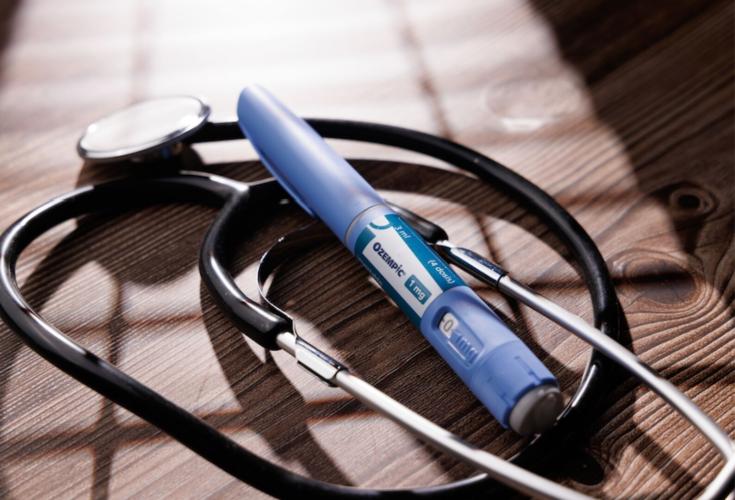 ">
NYU Study Links GLP-1 Drugs to Male Hair Loss Risk
- NYC Health News
- 1 month ago
A new NYU Langone Health study has identified a genetic connection that may help explain why some men experience hair loss while using GLP-1 medications such as Ozempic, Wegovy and Zepbound. Researchers found that men already genetically predisposed to androgenetic alopecia, commonly known as male-pattern hair loss, could face an additional 7 percent risk associated with GLP-1 activity. The findings go beyond previous theories that hair shedding among people taking the medications is primarily caused by rapid weight loss. Researchers say additional studies are needed to understand the biological mechanism and determine whether a similar genetic relationship exists in women.
- NYC Health News
- 1 month ago